


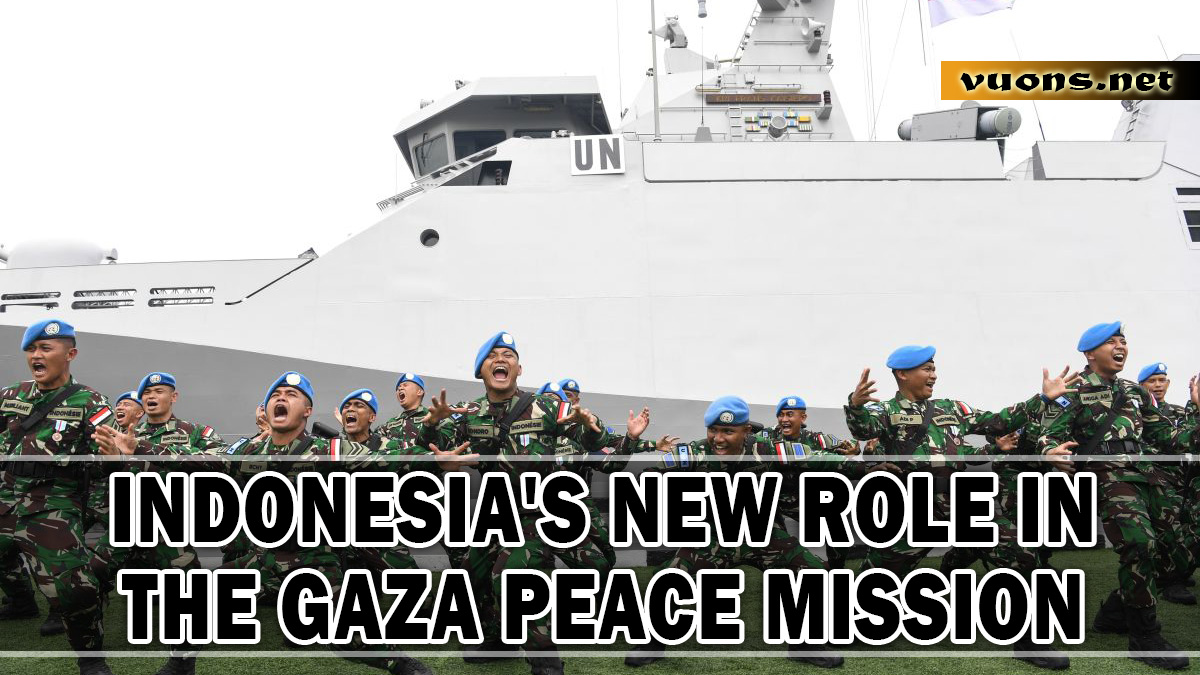
Indonesia’s New Role in the Gaza Peace Mission
Background to Indonesia’s Involvement
Indonesia’s New Role in the Gaza Peace Mission was not born in a vacuum, but rather is rooted in a long history of Indonesian diplomacy that consistently supports the Palestinian struggle. Since the early days of independence, Indonesia has placed the Palestinian issue as part of its moral commitment and independent and active foreign policy. This support has been manifested through international forums, humanitarian assistance, and contributions to United Nations peacekeeping missions in various conflict zones worldwide.
Indonesia’s New Role in the Gaza Peace Mission also reflects a transformation in Indonesia’s increasingly proactive diplomatic approach. While previously relying primarily on diplomacy and civilian aid, its involvement in the stabilization mission now demonstrates its readiness to take on greater responsibility on the global stage. This also reinforces Indonesia’s position as the country with the largest Muslim population, possessing moral legitimacy on the Palestinian issue.
Geopolitical Dynamics and Global Challenges
Indonesia’s New Role in the Gaza Peace Mission emerges amidst a highly complex geopolitical situation. The conflict in Gaza is not merely a regional issue but has broad implications for Middle East stability and relations between major powers. Every step Indonesia takes will be read as a political signal that will impact relations with the United States, Arab countries, and other global actors with strategic interests in the region.
Indonesia’s new role in the Gaza Peacekeeping Mission also faces challenges in the form of uncertainty regarding international mandates and command mechanisms on the ground. Several international reports, including an analysis previously published by bbc.com, have described the Gaza conflict as one of the most politically and humanitarianly sensitive crises. This situation demands extra caution to ensure that the presence of peacekeepers truly serves as a stabilizer, rather than complicating the already fragile conflict dynamics.
Military Readiness and Technical Aspects
Indonesia’s new role in the Gaza Peacekeeping Mission is inextricably linked to the readiness of its national defense institutions. The Indonesian National Armed Forces (TNI) has extensive experience in peacekeeping missions, including in Lebanon and several African countries. This experience is crucial in designing strategies for training, deployment, and coordination with other international forces likely to be involved in the same mission.
Indonesia’s new role in the Gaza Peacekeeping Mission also requires logistical readiness and legal protection for deployed troops. Aspects such as rules of engagement, civil protection, and emergency evacuation procedures must be carefully designed. Without detailed technical planning, security risks in conflict areas could increase. Therefore, cross-ministerial coordination and cooperation with international partners are important elements before troops are actually dispatched.
Domestic Responses and Public Opinion
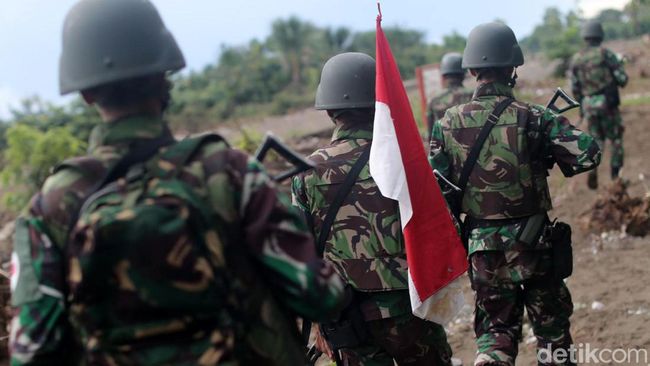
Indonesia’s New Role in the Gaza Peace Mission has drawn mixed responses domestically. Some see this move as a concrete form of solidarity with Palestine, which has previously only been expressed through political and humanitarian support. National pride emerged because Indonesia was seen as bold in taking a strategic role in a highly complex and risky global conflict.
Indonesia’s New Role in the Gaza Peace Mission has also drawn criticism from certain groups concerned about the safety of soldiers and the long-term political impact. They question whether large-scale military involvement will bring benefits commensurate with the risks. This debate demonstrates that foreign policy is not only about relations between countries, but also about legitimacy and public support at home.
Implications for Diplomacy and Global Image
Indonesia’s New Role in the Gaza Peace Mission has the potential to strengthen Indonesia’s image as a country actively maintaining world peace. Indonesia’s contributions to UN peacekeeping missions have been widely recognized. By taking a larger role in Gaza, Indonesia can expand its diplomatic influence and strengthen its position as a bridge between the West and Muslim countries.
Read also: Affiliate Business Opportunities in the Digital Era
Indonesia’s new role in the Gaza Peace Mission also opens up opportunities for broader economic and political diplomacy. Active involvement in global issues often increases a country’s bargaining power in international negotiations. However, this increased global profile must be balanced with a consistent foreign policy to avoid the appearance of opportunism. Indonesia’s credibility will depend heavily on a long-term commitment to stability and humanitarianism.
Future and Policy Direction
Indonesia’s new role in the Gaza Peace Mission could be a turning point in the history of Indonesian foreign policy. If this mission succeeds in creating stability and assisting the reconstruction process, Indonesia will be remembered as a key actor in peace efforts in a region plagued by protracted conflict. This success will undoubtedly strengthen national confidence in taking on similar roles in the future.
Indonesia’s new role in the Gaza Peace Mission will also provide important lessons on how developing countries can play a strategic role in global governance. The challenges that arise throughout this process will shape Indonesia’s approach to future international conflicts. With careful planning and solid political support, this step has the potential to lay the foundation for a more progressive and influential foreign policy globally.