


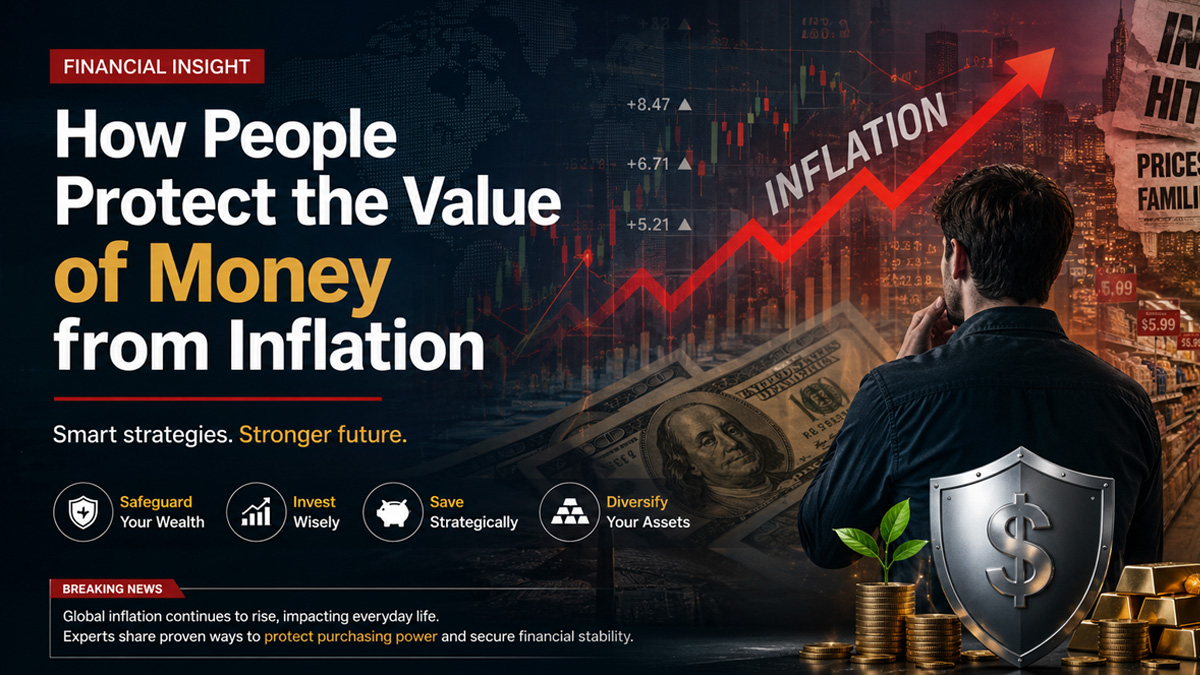
How People Protect the Value of Money from Inflation
Financial Strategies Are Increasingly Important
The rising prices of goods and services are one of the challenges that society continues to face. When the prices of basic necessities, transportation, and daily services increase, people’s purchasing power can gradually decline. This situation makes How People Protect Their Money from Inflation an increasingly relevant topic in modern life.
Amidst global economic uncertainty, many people are beginning to realize that saving money without careful planning is no longer the best option. Money’s seemingly stable nominal value can actually experience a decline in purchasing power due to ongoing inflation every year. Therefore, understanding How People Protect Their Money from Inflation is a crucial step for anyone looking to maintain financial stability.
Brief Summary
5 Ways to Protect Your Money from Inflation
- Managing a Disciplined Budget
- Choosing the Right Financial Instrument
- Using Gold as a Hedging Asset
- Diversifying Assets
- Improving Financial Literacy
- Inflation and Its Impact on Purchasing Power
Inflation is a condition where the prices of goods and services increase generally over a period of time. Although often considered a normal part of economic growth, rising inflation can put pressure on household finances. Therefore, how people protect their money from inflation is a concern for many who want to maintain their purchasing power in the long term.
The impact of inflation is most easily felt when the prices of daily necessities increase faster than income growth. This situation forces people to spend more to meet the same needs. In such circumstances, understanding how people protect their money from inflation can help individuals make more informed and planned financial decisions.
In addition to affecting daily expenses, inflation can also reduce the real value of long-term savings. According to financial education information available at UNFCU, understanding the relationship between inflation and financial management is a crucial step in maintaining financial health in the future. With adequate knowledge, people can develop more effective strategies to deal with economic changes.
Budgeting Is an Important First Step
One of the easiest ways to protect their money from inflation is to disciplinedly budget. This step helps individuals and families understand where their money is being spent each month. By understanding spending patterns, people can reduce waste and prioritize truly essential needs.
Budgeting also allows people to anticipate price increases that may occur in the future. When spending is well controlled, the pressure of inflation will be felt less than if finances are managed without planning. Therefore, how people protect their money from inflation often begins with simple habits that are consistently practiced.
Besides helping control spending, good budget management also opens up opportunities for saving and investing. Funds previously wasted on non-essential needs can be diverted to more productive financial goals. This way, people have a greater opportunity to maintain the value of their assets over the long term.
Saving Funds in the Right Instruments
Many people still keep the majority of their money in regular savings. While this method provides a sense of security and easy access, the returns often fail to keep pace with the rate of inflation. Therefore, how people protect their money from inflation often involves choosing financial instruments that have the potential for growth in value.
Various options such as deposits, bonds, and other investment instruments can be alternatives for maintaining the purchasing power of money. Each instrument has different characteristics and risk levels, so it needs to be tailored to each individual’s financial goals. By understanding the available options, people can determine the strategy that best suits their needs.
It’s important to understand that the primary goal isn’t simply to pursue high returns, but rather to protect the value of money from further depreciation due to inflation. Therefore, protecting the value of money from inflation must be done by considering the balance between fund security and asset growth potential.
Gold Remains a Popular Choice for Many People

In many countries, gold is often considered an asset capable of maintaining its value over the long term. It’s not surprising that this precious metal remains a popular choice for protecting against inflation. When economic conditions experience uncertainty, demand for gold tends to increase.
One of the main reasons for gold’s popularity is its ability to withstand various economic changes. Unlike cash, which can be eroded by inflation, gold is often viewed as an asset with intrinsic value. Therefore, many people consider it part of their wealth protection strategy.
However, gold prices can also fluctuate in the short term. Therefore, using gold as part of a strategy for protecting against inflation should be approached with a long-term perspective. With the right approach, gold can be a useful complement to a financial portfolio.
Diversification Becomes an Increasingly Popular Strategy
Diversification is a strategy implemented by dividing funds into several different types of assets. This approach aims to reduce the risk that arises if a single asset declines in value. In practice, strategies for protecting against inflation often do not rely on a single instrument.
Read also: North America Shines Bright on the World Cup Stage
Many financial planners advise against investing all of their funds in a single investment. Having multiple sources of asset growth allows for better risk management. Furthermore, diversification provides flexibility when market conditions experience unexpected changes.
This concept is gaining popularity because it is considered capable of providing a balance between security and growth opportunities. Therefore, protecting the value of money from inflation through diversification has become a popular option for modern people seeking to maintain their financial stability.
Financial Literacy Helps Facing Economic Change
Technological developments have made financial information increasingly accessible to the public. However, this convenience needs to be balanced with the ability to understand and filter the available information. In this context, protecting the value of money from inflation is closely related to a person’s level of financial literacy.
People who understand financial basics tend to be better prepared to face various economic changes. They can make more rational decisions, understand investment risks, and manage expenses more effectively. These skills are essential for maintaining long-term financial health.
Furthermore, financial literacy helps people recognize the opportunities and challenges that arise from economic development. With continually updated knowledge, the Community’s Ways of Protecting Money from Inflation can be implemented more effectively and tailored to each individual’s needs. Ultimately, the habit of learning and understanding economic conditions is one of the best investments one can make for the future.
One thought on “How People Protect the Value of Money from Inflation”
Comments are closed.